That's "Happy Leap Day" in French, for all my non-French-speaking readers (and if I happen to actually have any French-speaking readers, I apologize in advance and blame Google Translate).
Why French? Because following long-standing Internet Tradition, today happens to be the day for celebrating the one of the greatest French characters ever created by Marvel:
Showing posts with label Captain America. Show all posts
Showing posts with label Captain America. Show all posts
Monday, February 29, 2016

Tuesday, April 01, 2014
Where's My Flying Car?
 |
| Or even a hoverboard? |
In the real world, of course, there are a myriad of reasons for this. Gravity manipulation, if even possible, is still years away, and while more mundane versions of flying cars have been developed, they still run into the problem of being much harder to use than the traditional auto.
In fiction, of course, things can get much more interesting. For example, in Captain America: The First Avenger we see Howard Stark showing off a car retrofitted with "Stark Gravitic Reversion Technology", a feat all the more impressive for being achieved in 1943.
True, it doesn't last very long, but the technology seems well-developed enough to become widespread in fairly short order. That it doesn't can, I think, be explained by this later development:
Clearly, "Gravitic Reversion" is one of the things that S.H.E.I.L.D has been keeping under wraps for all these years - Lola is, I understand, based on a 1962 model Corvette, although of course the hover-conversion could have taken place at any point subsequently. Of particular interest, to me anyway, is that Lola's transition process looks and sounds a lot like the DeLorean's. It's very tempting to conflate the two, and having hover-tech be suppressed by S.H.E.I.L.D for much of the development period explains how it becomes so widespread so soon after it becomes public.
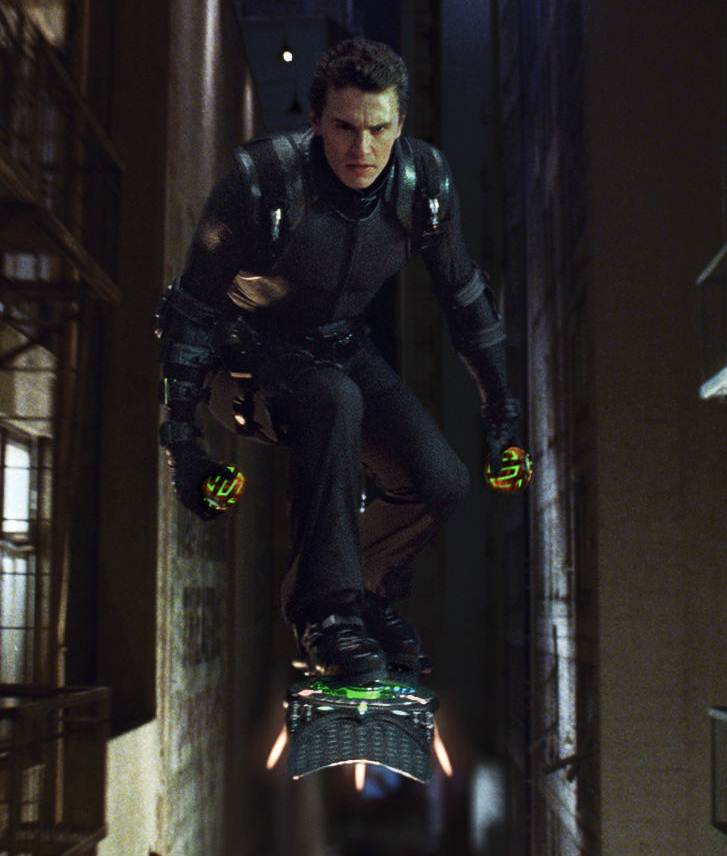 |
| OsCorp, though promising, was rejected for consideration. For obvious reasons. |
For now, though, flying cars and anti-gravity skateboards remain the stuff of fiction, looking forward to the day when we really aren't going to need roads.
Tuesday, May 14, 2013
The Avengers, and Other Marvelous Things
So yes, this is old news, but The Avengers is amazing. It takes everything that was good about the previous half-dozen Marvel Cinematic Universe movies, and concentrates it down into two-and-a-half hours of what may be the best superhero movie to date.
If I had to pick one word to sum up the film, I think I would choose balanced. There are several ways that this is relevant - in terms of spectacle vs. plot, for example, the movie manages to excel at the former without it being (as is too often the case) at the expense of the latter. Also applicable is the way the film balanced the hitherto unprecedented - so far as I'm aware - team-up of heroes who previously carried four individual franchises, a feat made even more extraordinary by its success. Each one got some time in the spotlight, simultaneously continuing their stories from previous outings and emerging ready to slip back into solo-dom with minimal disruption.
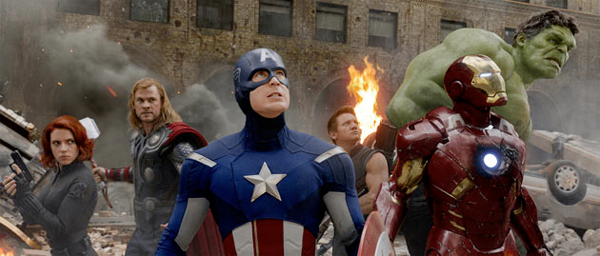
Iron Man, having had around 100% more prior movie time than almost any of his team-mates, seemed to me to be the most static in terms of development, though his introduction would certainly seem to indicate his relationship with Pepper has developed from what I remember. There was also that nifty armor upgrade, which makes a nice midpoint between the backpack-armor we saw in Iron Man 2 and Iron Man 3's rumored nano-tech-armor. Finally, he did have a bit of a character arc in his response to Captain America's remarks about sacrifice, and I really liked the way he insisted on interacting with Dr. Banner as a fellow scientist rather than a potential Hulk.
Speaking of the Hulk, in some ways he had the most to overcome, with his multiple actors and somewhat uneven prior films. In a lot of ways, however, he was the breakout star of the film - certainly he was responsible for many of the film's most popular moments (such as the punching the first giant robot dragon-fish, and of course his "Puny god" line). Would these moments be enough to carry a solo film? I'm sure we'll find out eventually, but in the meantime I'm looking forward to Hulk and/or Dr. Banner making cameos in his team-mates' movies. I'd like to think, giving him going off with Tony at the end of Avengers, that Iron Man III is the most likely candidate for this, but given the trailers and early reactions to III so far I'm not holding my breath.
Other solo sequels are sounding equally good. Despite the fact that Thor was not really my favorite of the "Phase One" Marvel films, I'm very excited about the direction that the sequel is taking. Of course, part of this is because I somewhat jokingly predicted this back when the first film came out, but hey - Space Elves are cool anytime. Thor's appearance in The Avengers itself was not quite that exciting, unfortunately - his biggest roles, it seemed, were facilitating hero-on-hero brawls and contributing secondary characters, namely Loki and Dr. Selvig. Not that either of those is unimportant, but they just didn't have quite the same focus as some of the other members. It didn't help that Thor was the one who delivered what I thought was the worst line in the movie - though funny, "He's adopted" was a rather out-of-character statement, in more ways than one.
Rounding out the "Big Four" of the team is Captain America whom, more than the others, ended his last solo film on a bit of a cliffhanger. He didn't get a whole lot of a chance to catch his breath and adjust to the 21st century, either, though there are a few signs that such an adjustment is taking place - note his mention of feeling at home on the Helicarrier. More than adjusting to the times, though, we saw Cap adjusting to being part of a different team than he was used to.
 This will be important later, as 2014's scheduled film Captain America: The Winter Soldier sounds like it will feature not only the titular Solider (no spoilers, but that title's a giveaway for something we all knew would happen), but also Black Widow and a new hero, the Falcon. How exactly this will shake out remains to be seen, but it can't be harder than Cap learning to work with Tony and Thor (the latter of whom, incidentally, prompted Cap to utter my absolute favorite line in the whole film: "There's only one God, Ma'am, and I'm pretty sure He doesn't dress like that").
For all the appropriateness of Black Widow appearing in Winter Solider, it does seem a shame that it probably means she won't be getting her own movie. Both she and Hawkeye, in fact, managed the jump from "secondary character" to "ensemble lead" quite well, especially considering the latter's post-production introduction into Thor. Spending half the film mind-controlled was perhaps a bit of a heavy-handed way to generate audience sympathy for a relative unknown, but revealing and drawing on a shared past with Natasha made his integration surprisingly easy. And of course the Widow herself had a great second appearance, being an effective Avenger even with a slightly out-of-genre skillset.
Finally, Agent Coulson. From the moment that Joss Whedon was revealed as the film's director, speculation ran rampant that Phil "First Name Is Agent" Coulson wouldn't make it through the film. It was such an obvious ploy that when it actually happened, I was actually a little surprised. That didn't make it any less meaningful, of course, either to the audience or the other characters - it helped that Phil had some great character-building scenes before getting killed, especially the ones opposite Captain America.
Happily, in true comic-book fashion it appears that the Son of Coul has cheated death (exact method unknown, though I lean towards the "Nick Fury exaggerated the extent of his injuries to give the team something to Avenge" theory) and will be taking the lead in a Marvel Cinematic Universe TV show, Agents of S.H.I.E.L.D:
Not quite the SHIELD movie I was hoping for, but it has promise. I'm especially intrigued by the idea of the apparently anti-SHIELD organization The Rising Tide. Other details are sketchy at the moment but I'm definitely willing to give this show a try.
In a way, The Avengers was really a transition point not only in the development of the MCU, but the superhero-film industry generally. The effects of showing that such an elaborate project could not only work, but work well, remain to be seen - but in the meanwhile, bring on Phase II!
EDIT: Typically, just a few hours after I posted this another, much longer promo for Agents of S.H.I.E.L.D went up. My interest is not reduced:
If I had to pick one word to sum up the film, I think I would choose balanced. There are several ways that this is relevant - in terms of spectacle vs. plot, for example, the movie manages to excel at the former without it being (as is too often the case) at the expense of the latter. Also applicable is the way the film balanced the hitherto unprecedented - so far as I'm aware - team-up of heroes who previously carried four individual franchises, a feat made even more extraordinary by its success. Each one got some time in the spotlight, simultaneously continuing their stories from previous outings and emerging ready to slip back into solo-dom with minimal disruption.
Iron Man, having had around 100% more prior movie time than almost any of his team-mates, seemed to me to be the most static in terms of development, though his introduction would certainly seem to indicate his relationship with Pepper has developed from what I remember. There was also that nifty armor upgrade, which makes a nice midpoint between the backpack-armor we saw in Iron Man 2 and Iron Man 3's rumored nano-tech-armor. Finally, he did have a bit of a character arc in his response to Captain America's remarks about sacrifice, and I really liked the way he insisted on interacting with Dr. Banner as a fellow scientist rather than a potential Hulk.
 |
| Then again, Hulkbuster! |
Other solo sequels are sounding equally good. Despite the fact that Thor was not really my favorite of the "Phase One" Marvel films, I'm very excited about the direction that the sequel is taking. Of course, part of this is because I somewhat jokingly predicted this back when the first film came out, but hey - Space Elves are cool anytime. Thor's appearance in The Avengers itself was not quite that exciting, unfortunately - his biggest roles, it seemed, were facilitating hero-on-hero brawls and contributing secondary characters, namely Loki and Dr. Selvig. Not that either of those is unimportant, but they just didn't have quite the same focus as some of the other members. It didn't help that Thor was the one who delivered what I thought was the worst line in the movie - though funny, "He's adopted" was a rather out-of-character statement, in more ways than one.
Rounding out the "Big Four" of the team is Captain America whom, more than the others, ended his last solo film on a bit of a cliffhanger. He didn't get a whole lot of a chance to catch his breath and adjust to the 21st century, either, though there are a few signs that such an adjustment is taking place - note his mention of feeling at home on the Helicarrier. More than adjusting to the times, though, we saw Cap adjusting to being part of a different team than he was used to.
This will be important later, as 2014's scheduled film Captain America: The Winter Soldier sounds like it will feature not only the titular Solider (no spoilers, but that title's a giveaway for something we all knew would happen), but also Black Widow and a new hero, the Falcon. How exactly this will shake out remains to be seen, but it can't be harder than Cap learning to work with Tony and Thor (the latter of whom, incidentally, prompted Cap to utter my absolute favorite line in the whole film: "There's only one God, Ma'am, and I'm pretty sure He doesn't dress like that").For all the appropriateness of Black Widow appearing in Winter Solider, it does seem a shame that it probably means she won't be getting her own movie. Both she and Hawkeye, in fact, managed the jump from "secondary character" to "ensemble lead" quite well, especially considering the latter's post-production introduction into Thor. Spending half the film mind-controlled was perhaps a bit of a heavy-handed way to generate audience sympathy for a relative unknown, but revealing and drawing on a shared past with Natasha made his integration surprisingly easy. And of course the Widow herself had a great second appearance, being an effective Avenger even with a slightly out-of-genre skillset.
Finally, Agent Coulson. From the moment that Joss Whedon was revealed as the film's director, speculation ran rampant that Phil "First Name Is Agent" Coulson wouldn't make it through the film. It was such an obvious ploy that when it actually happened, I was actually a little surprised. That didn't make it any less meaningful, of course, either to the audience or the other characters - it helped that Phil had some great character-building scenes before getting killed, especially the ones opposite Captain America.
Happily, in true comic-book fashion it appears that the Son of Coul has cheated death (exact method unknown, though I lean towards the "Nick Fury exaggerated the extent of his injuries to give the team something to Avenge" theory) and will be taking the lead in a Marvel Cinematic Universe TV show, Agents of S.H.I.E.L.D:
Not quite the SHIELD movie I was hoping for, but it has promise. I'm especially intrigued by the idea of the apparently anti-SHIELD organization The Rising Tide. Other details are sketchy at the moment but I'm definitely willing to give this show a try.
In a way, The Avengers was really a transition point not only in the development of the MCU, but the superhero-film industry generally. The effects of showing that such an elaborate project could not only work, but work well, remain to be seen - but in the meanwhile, bring on Phase II!
EDIT: Typically, just a few hours after I posted this another, much longer promo for Agents of S.H.I.E.L.D went up. My interest is not reduced:
Wednesday, August 03, 2011
Avengers Assembled
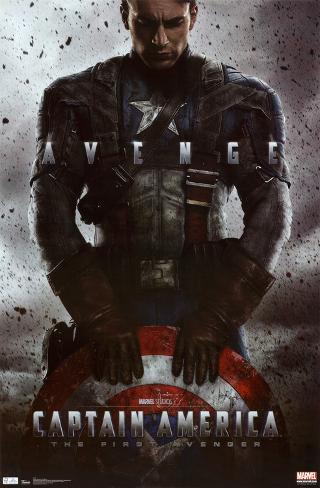
Which was, in my estimation, an excellent movie. In the inevitable competition between Cap and Thor, I believe I prefer the former - though this is largely on account of a general preference for pulpy to cosmic action.
Luckily, Captain America has some fairly substantial pulp roots, being directed by Joe Johnson, who also directed The Rocketeer and won an Oscar for effects work on Raiders of the Lost Ark - the latter, in fact, gets a shout-out from the Red Skull, who criticizes Adolph Hitler's search for "trinkets in the desert" while he has harnessed the power of Asgard.
Yeah, Asgard. One of the numerous things the film did well was tying in the previous films, in a much more overt manner than the blink-and-miss references of previous films. As mentioned, the power source for Red Skull's weird war machines is an artifact from Thor's Asgard - the 'chapel' scene where he first acquires it makes this patently obvious - and his last scene strongly implies that he got swept up into the Bifrost. On the allied side, one of the SSR's scientists is none other than Howard Stark, future father of Tony, and apparently the inventor of a mid-20th-century hovercar.
Indeed, I was greatly impressed with the film's the pulpy super-tech, and the general look of the film - it's probably the first time I have walked out of the theater and thought "Hmm, I wonder if there's an Art of book available yet?" (There is.)
But it takes more than good art direction to make a decent film. Fortunately, Captain America pays as much attention to story and character as it does to spectacle. The focus, of course, is on Steve Rogers - I thought the film did an excellent job of showing how, even pre-serum, he displayed the qualities of bravery (his beating in the alley), intelligence (the flagpole incident), and selflessness (the grenade episode), and how the serum merely allowed him to give full expression to his already noble character, less the relatively short time he spends in the USO (which, though objectively it may have actually been an important contribution to the war effort, was certainly portrayed as Cap not living up to his potential).
Previously, I had mentioned that I thought the preview of the Tesseract at the end of Thor was an odd choice, telegraphing as it did the ending of this film. As it happens, this turned out not to be a big deal, as we see - or at least infer - what happens to Cap at the end of the war, at the beginning of the film. Knowing what's coming, the fate of the Cube isn't nearly as important (and we do see its final acquisition by the proto-S.H.I.E.L.D, in a nice scene that builds both Cap's and Howard Stark's characters, without Cap even being present).
The film proper ends with Cap's introduction to the modern world, in a scene which cunningly mirrors the first few moments after he took the serum. Showing up to explain things is Nick Fury (of course), leading into next spring's Avengers film - which, now that all the principals have been shown, was previewed in a teaser trailer after the credits. Is it May 2012 yet?
Anyway, despite that buildup I think that Captain America works equally well as a stand-alone movie. It's not without its flaws - I was particular bothered by a few scenes in the "battles montage" that screamed "obviously supposed to be in 3-D!!" - but the good parts of the movie more than make up for it.
Subscribe to:
Posts (Atom)


 Posts
Posts

