Showing posts with label Literary Archeology. Show all posts

Sunday, November 17, 2019

Introducing the Inklings Literary Crossover Universe

This past April Fool's Day, C. S. Lewis fansite NarniaFans.com posted an article claiming that the Tolkien biopic would feature a post-credits cameo of Lewis, thus setting up the "Inklings Cinematic Universe". While an amusing reference to 2008's Iron Man and the franchise it spawned, in the absence of the scheduled-for-this-month Lewis film (starring current Spider-Man Tom Holland in the title role!), it occurred to me that the Inklings, or at least Lewis and J.R.R. Tolkien, had put enough shout-outs and shared concepts into their work to form a little universe of their own.

Art by Afalstein
The linchpin of this Inklings Literary Crossover Universe, or ILCU, is Tolkien's unfinished 1945 novel The Notion Club Papers. In this story, an ersatz version of the Inklings discuss science fiction and experiment with astral projection, culminating in an echo of the sinking of Atlantis manifesting in the modern Atlantic. Now, there's a good deal more going on in the story than that - it's a very experimental piece of writing in many ways, quite distinct from Tolkien's usual neomythic mode - but for ILCU purposes there's two things to focus on. First is that Tolkien uses in the story his own version of Atlantis, or more properly NĂºmenor, that sits in the background of The Lord of the Rings as the homeland of Aragorn's ancestors. This fits with Tolkien's idea that Middle-Earth is the mythic past of our own world.

The other thing to note about The Notion Club Papers is that one of the works discussed early on is Out of the Silent Planet, the first book in C. S. Lewis' Cosmic Trilogy. What makes this interesting from a crossover world-building perspective is that Out of the Silent Planet ends with a conversation between the protagonist Elwin Ransom (in many ways a fictionalized Tolkien) and the un-named narrator (implicitly Lewis himself) discussing how they were going to publish an account of the story marketed as fiction. So, we can assume that the world of the Notion Club's psychic voyages is the same as Dr. Ransom's physical ones, and both are the far future of Middle-Earth. The last Cosmic Trilogy book, That Hideous Strength, also talks about Atlantis as "Numinor", strengthening the connection.

Another connection to the Cosmic Trilogy that only recently came to my attention is the result of the academic work of Brenton Dickieson, who in a 2016 blog post described his discovery of a hitherto unknown draft preface to The Screwtape Letters which attributed the acquisition and translation of the letters as being from none other than Dr. Elwin Ransom. As the following chart shows, Screwtape was written after Out of the Silent Planet but before its two true sequels (there's also the whole issue of the controversial The Dark Tower, which I have yet to read):


Now, this definitely shows that Lewis made a couple of false starts in developing the sequel to Out of the Silent Planet, and the extent to which he still considered Screwtape to be connected is an open question. Personally, I can think of a couple of episodes in Screwtape that support the connective interpretation, such as the incident where Screwtape "inadvertently assumes the form of a large centipede", similar to the end of the fight between Ransom and the Un-Man in Perelandra. And frankly, the idea of Wormwood and Screwtape as bent Eldila toiling away under the fallen Oyarsa Melkor is, to me at least, a pleasingly coherent one.

One final thought for this post, and that's how Lewis' claim to fame, The Chronicles of Narnia, might be brought into the ILCU. Unfortunately there is not, to my immediate recollection, a direct textual link between the Chronicles and the other works of the various Inklings. The penultimate book in the series, The Magician's Nephew, offers a few thematic links, such as a mention of Atlantis (not Numenor, this time), and the image shared with Tolkien's work of the universe being sung into existence. There are references to Sherlock Holmes and the Bastable children, which were used by Win Scott Eckert in his Crossovers series to fit the Chronicles into his post-Farmer Wold Newton work (a context in which I've mentioned The Notion Club Papers before), but a direct Inklings-only connection will require additional research.

Sunday, December 23, 2018

Three Hearts, Three Lions, Two Wizards

Recently I've been reading Three Hearts and Three Lions by Poul Anderson, which is about a man fighting in World War II who discovers he has another life as a famous knight in a world that resembles the chivalric romances of King Arthur and similar tales.

It's an enjoyable read, and a fascinating work for any number of reasons - the both implicit and explicit Christianity, the clear antecedents for some elements of fantasy role-playing games (I believe Jeffro addressed this in Appendix N), the way the main character uses his modern knowledge to survive some of the more fantastic elements - although this last, I thought, was somewhat overused and undercut my belief in the setting, to an extent. The rationalization of the giant's cursed gold as being irradiated by the process of turning to stone was an especially bad example.

But the one element that really made me take notice was in Chapter 15, when the knight and his companions visit a wizard to see about getting the knight back to his home world. Said wizard has a sign on his house that reads:

MARTINUS TRISMEGISTUS
Master Magici
Spells, Charms, Prophecies, Healing, Love Potions
Blessings, Curses, Ever-Filled Purses
Special rates for parties

It's not, I think, intended to be entirely serious, and indeed the wizard in question admits that some of the services are for advertising only. However, it brought to mind another advertisement by a wizard some half a century later:

Lost Items Found, Paranormal Investigations
Consulting, Advice, Reasonable Rates
No Love Potions, Endless Purses, Parties, or Other
Entertainment

Now, I've checked the Word of Jim website and have seen no definitive proof of this, but I cannot believe that Harry's ad isn't a response to Martinus'. Not just the format, but especially that last line seems to set up a deliberate dichotomy between the two.

 Whether this specific influence is intended, unconscious, or imagined, I would say that both The Dresden Files and Three Hearts and Three Lions are worth reading. Indeed, as a standalone work the latter is in some ways, despite being originally published in 1953, more accessible.

Saturday, January 13, 2018

Deuterocanonical Dresden

One of my blogging goals for 2018 is to revisit and hopefully cap off some of the series of posts that have been left hanging in previous years. Of these, the most egregious is my planned re-read of the Dresden Files series by Jim Butcher, which spluttered out before I even got to the first novel. There are now fifteen novels in the series, along with the various short prose and comic-book stories, and while the release date for the sixteenth has not yet been announced, this summer will see the release of the second short story collection, Brief Cases. Whatever the real-life circumstances that have delayed Harry's adventures, at least we know Jim hasn't lost his touch in coming up with snappy titles.

But all of that is in the future - today, I'd like to highlight a neat resource for Dresden fans that has recently come online. This website is called Word of Jim, and is a compilation of forum postings, live interview responses, comments left on Amazon reviews, and other such ephemera made by Jim Butcher himself that drop hints at future books and explain or undercut various explanations for ongoing mysteries, or just wacky fan ideas. It's great fun to browse through, although I have yet to locate the place where he says that Ronald Reuel, the titular Summer Knight of Summer Knight, is not the same guy as J. R. R. Tolkien. However, another tidbit seems to support my theory that he is:

I’m sure it’s just one of those freaky coincidences. Tweed-clad old smiling ‘creator of worlds of imagination’ Ronald Reuel, Summer Knight of the Seelie Court does not look a thing like Tolkein.

Or, uh. Well he does, yeah.

On advice of legal council, I claim the right of the fifth amendment not to testify against myself…
On the other hand his statements that Justin DuMorne, Harry's guardian, was absolutely, no-questions, "D-E-D dead" (which I take as evidence that Harry's mentor is still alive*) are available, although I had a bit of trouble finding them since I was initially using "DuMorne" as my search term. Truth be told, some of the pages could use a bit of subdivision.

As we mostly-patiently wait for Brief Cases, as well as the next two novels, Peace Talks and Mirror, Mirror (which will be about exactly what you're thinking), I anticipate that Word of Jim will become a well-used resource by the Dresden fan community, and I thank the compiler "Serack the WoJ Guru" for his efforts.


*OK, here goes. Some years before gaining guardianship of the young Harry Dresden, Justin DuMorne was, by all accounts, an exemplary Warden (The Dresden Files' version of a wizardly police officer), who was involved in the takedown of a dangerous necromancer named Kemmler. Immediately after Kemmler's seemingly final demise, however, he absconded with a dangerous artifact (the yet-unnamed Bob the Skull) and, later, trained Harry as a wizard without any of the usual ethical instruction. Later Harry encounters a bunch of Kemmler's old hangers-on, including one with the charming nickname "Corpsetaker", who specializes in tactical body-swapping.

My theory, then, is that during that last battle Justin DuMorne was the victim of a similar body-swap initiated by Kemmler, and thus was killed in the necromancer's body while his own identity was stolen by Kemmler. Thus, DuMorne is, as Jim points out, as dead as Kemmler, in that they both half are and half aren't. Of course, if Jim never brings Kemmler back to face Harry again they might just as well be all dead, but at this point in Harry's career a legendary necromancer with the face of his hated guardian is just the sort of enemy he might encounter. And I have my suspicions about the mysterious figure called Cowl . . .


Sunday, May 28, 2017

Is S.M.Stirling's Emberverse Inspired By John Norman's Gor Series?

A few months back I talked about a podcast called Geek Gab, mentioning that I wasn't a regular listener, but was interested because they were interviewing Jeffro Johnson about his "Appendix N" book. Since then, however, I've been tuning in more often than not, even as they've grown from a single weekly show to a veritable online network.

In one recent episode of the spinoff show Geek Gab Game Night, the guest, game designer Jim Desborough, was talking about his adaption to tabletop gaming of the Gor novels by John Norman. Now, I'm only familiar with this series through it's rather dubious reputation, but the podcast covered most of the non-dubious basics - Gor is a planet in Earth's orbit (only on the opposite side of the sun so it can't be detected from Earth), which has been seeded by inscrutable aliens with small populations of various Earth cultures spirited away and kept from progressing to far down certain areas of technological development, notably firearms.

In the course of the discussion, a brief mention was made of S. M. Stirling's time-traveling Nantucket trilogy that began with Island in the Sea of Time, which got me thinking about the spin-off series that Stirling started with Dies the Fire. That book begins with a catastrophe similar to a worldwide EMP pulse that also depowers gunpowder, somehow. As the books go on, there's a recurring theme - calling it a subplot would be giving it too much credit - of people studying what they call the Change and concluding that, scientifically, it makes absolutely no sense. Eventually it is revealed that, like on Gor, humanity is being artificially kept in its Medieval Stasis by inscrutable aliens*, albeit ones considerably less flashy than the ones on Gor.

Even more intriguingly, the setting has gone through a number of time-skips and is now a couple of generations from the Change. One of the more interesting aspects, as the character's horizons expand, is that they keep meeting different groups of people who've survived psychologically by taking a shared element - say, the RCMP or the Boy Scouts - and making it the foundation of a new culture. This tends to give the map, at least in North America, a sort of anachronistic crazy-quilt feel, much like the descriptions of Gor with its chronologically diverse groups of alien-abducted Earth people.

So was Stirling intentionally riffing on these elements of the Gor setting? I don't know of any concrete evidence one way or another, but I do suspect it to be an unconscious influence. Of course, it could also be a coincidence** that the main villain of the first few books is named Norman, and has a bit of the, shall we say, Gorean philosopher about him . . .

*Actually an inscrutable far-future human gestalt super-mind, or something.

**More certainly a coincidence, and certainly more of a stretch, is the appearance of an ersatz Tarzan in one of the stories in the universe-opening short story collection Stirling edited a few years back. Tarzan, of course, was an invention of Edgar Rice Burroughs along with John Carter, whose Barsoomian adventures the first few Gor books are said to be a New Wave-ish pastiche of.

Thursday, April 14, 2016

That Time Atomic Robo Got A Shoeshine From Short Round

So after a fairly heavy storyline in which Robo wakes up from his detour to the late nineteenth century to discover that the world in under the control of a US Government conspiracy started to oppose him, specifically, and being attacked by kaiju, the latest issue of the Atomic Robo webcomic is delving into the past for some wacky espionage shenanigans in 1938 China.

To be more precise, Robo visits the Japanese-occupied city of Shanghai, where he makes contact with a rather familiar-looking member of the resistance forces. It is, of course, Short Round, first seen rescuing Indiana Jones from gangsters in the opening of Indiana Jones and the Temple of Doom - the New York Giants hat is a dead giveaway. It only makes sense, after all, that even if he ended up spending some time acting as Indy's sidekick elsewhere in the world (he does pop up in this capacity from time to time in the Indiana Jones Expanded Universe, most notably in the sadly non-canonical Into the Great Unknown), he would return to his native Shanghai to help repel the invading Japanese. This would also explain what Short Round was doing while Indy was hunting for the Holy Grail in Indiana Jones and the Last Crusade, which also takes place in 1938.

And lest the reader think that the hat is a coincidence - it's not impossible that two such hats were floating around in Shanghai even in the 1930s - there's the little matter of the place Robo gets sent for the next meeting:

No, Robo, there is not.
While it's not quite the venerable Club Obi Wan (and yes, folks, that's a Star Wars joke), it might possibly be the same building, and it's almost certainly named after Willie Scott's memorable last performance before she got dragged into Short Round and Indy's escape. Perhaps Lao Che was in a nostalgic mood when he was doing the remodeling. We may yet find out, as Robo has yet to do more than walk in the front door of the club. Might Lao Che himself be waiting inside? It wouldn't be very much out of character for the writers of the comic - the last issue, after all, was very much a homage to Pacific Rim, while the one prior to that ended with cameo appearances from Agents West and Gordon from The Wild, Wild, West. And the name of this storyline, as it turns out, is The Temple of Od . . .

Tuesday, April 01, 2014

Where's My Flying Car?

Or even a hoverboard?
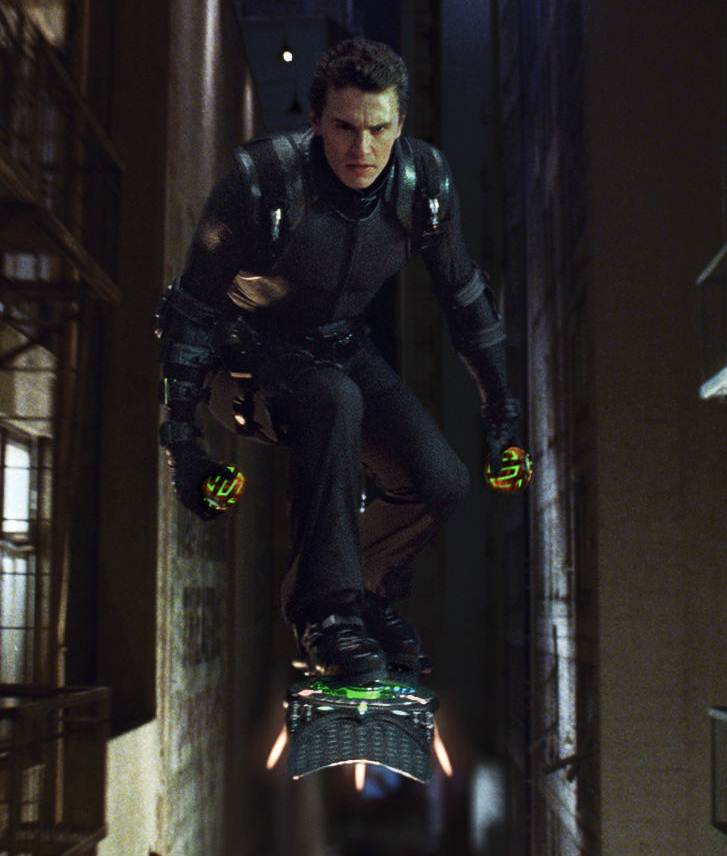
Except perhaps the jetpack, nothing quite says "retro-futurism" like the flying car. Probably the most famous is, of course, Doc Brown's DeLorean time machine from the end of Back to the Future. In Part II, we see that the source if this technology is the year 2015, when hover-tech is built into practically everything. With 2015 now less than a year away, the odds of this particular vision of the future seems increasingly remote.

In the real world, of course, there are a myriad of reasons for this. Gravity manipulation, if even possible, is still years away, and while more mundane versions of flying cars have been developed, they still run into the problem of being much harder to use than the traditional auto.

In fiction, of course, things can get much more interesting. For example, in Captain America: The First Avenger we see Howard Stark showing off a car retrofitted with "Stark Gravitic Reversion Technology", a feat all the more impressive for being achieved in 1943.


True, it doesn't last very long, but the technology seems well-developed enough to become widespread in fairly short order. That it doesn't can, I think, be explained by this later development:


Clearly, "Gravitic Reversion" is one of the things that S.H.E.I.L.D has been keeping under wraps for all these years - Lola is, I understand, based on a 1962 model Corvette, although of course the hover-conversion could have taken place at any point subsequently. Of particular interest, to me anyway, is that Lola's transition process looks and sounds a lot like the DeLorean's. It's very tempting to conflate the two, and having hover-tech be suppressed by S.H.E.I.L.D for much of the development period explains how it becomes so widespread so soon after it becomes public.

OsCorp, though promising, was
rejected for consideration.
For obvious reasons.
Of course, when they did decide to release it S.H.E.I.L.D probably still wouldn't want to admit they'd been suppressing it, so the release would probably be done through an intermediary. About a month ago there was a flurry of interest surrounding HUVrTech, which purported to be a company that had indeed developed a Back to the Future-esque hoverboard. Of course it turned out to be a prank, though one a lot of people seem to have believed (in retrospect they should have waited until today to announce it . . . then again, they probably wouldn't have had as many people believe it if they had), but their announcement - coming December 2014! - is pretty much how I would expect things to go if a shadowy conspiracy was in charge of technological development.

For now, though, flying cars and anti-gravity skateboards remain the stuff of fiction, looking forward to the day when we really aren't going to need roads.


Wednesday, August 15, 2012

The Secret of the Doctor's Grand-Daughter: An Exercise in Creative Mythography

About a year ago, I came across some references to a comic book hero called Atomic Robo. Although mostly appearing in print, several adventures are available for viewing online. One in particular, as soon as I began reading it, signaled to me that this was a story, and a character, I was really going to like.


No, they don't ever explain why Atomic Robo is driving B.A. Baracus' van, though I have a faint hope that the upcoming titled-but-unscheduled "Atomic Robo and the Soliders of Fortune" arc will address this.

Friday, July 27, 2012

Holmes for the Holidays

Something I've noticed over the past several months in my reading and film-watching habits recently has been a sharp increase in stories starring Sherlock Holmes. While I've long been a fan of the Greatest Detective, these things tend to come in waves, and right now the Holmes-wave is cresting.

Most obviously, the arrival of Sherlock Holmes: A Game of Shadows in theaters last December was an occasion of some welcome. I see that the first Guy Ritchie-directed Holmes adaptation came out during my own hiatus, and thus went uncommented on. I'll just take this opportunity to say that I found it an excellent movie, one that hewed close to the spirit of Doyle's stories, if not being perfectly accurate in every detail.

And I swear the tagline is an amusing coincidence.

The sequel is the pretty much the same, only more so. I do have a few quibbles with it - the liberties taken with the storyline were somewhat more noticeable, given that the film was adapting an existing Holmes story rather than making one out of whole cloth. I was also rather irritated at the fate of Irene Adler in the film, though I take some comfort from the fact that we never saw the body. So to speak.

Holmes and Watson, though, were in top form. Especially gratifying was the expanded use of Holmes' "plot-out-the-fight-in-slow-motion-in-advance" brawling technique, even considering the time that Holmes' meticulous sequence was derailed by a third party throwing a knife. And of course, his final encounter with Moriarty took this form as well, with amazing results. And let's not forget Watson -  I especially appreciated his use of deductive reasoning concerning Mycroft's appearance at his "bachelor party", as well as his penultimate confrontation with Colonel Moran.

Finally, I thought Jared Harris' portrayal of Professor Moriarty to be pretty good, with just the right amount of civility papering over seething menace. His plot was refreshingly prosaic, though it reminded me quite a bit - OK, it was pretty much identical - to the Fantom's plot in The League of Extraordinary Gentlemen. And we all know who he turned out to be:

Friday, July 01, 2011

30 Day Book Challenge - Day 5

So, yeah, at this point it's pretty obvious I'm not going to be doing all 30 of these in June. Sorry about that.


Day 5 – A Book That Makes You Happy

Observant and regular readers will have probably noticed by this point that one of the things I look for in my fiction is coherent (or at least interesting) world-building. The acknowledged grandmaster of this, of course, is J.R.R. Tolkien; he even coined some of the terminology associated with this, such as "Secondary World" and "sub-creation".

Some authors and other scholars take this one step farther - treating their favorite stories as the lightly-fictionalized records of real events, analyzing broad swathes of literature to uncover the "true" events behind them, and connecting them. This game has been played with popular literature for quite some time, and has interested me ever since I first heard of it. Indeed, I've even dabbled in The Game myself, and was actually intending to make this post about Crossovers.

Then, I finally manged to get ahold of a copy of Myths for the Modern Age, a collection of essays exploring this kind of "Tertiary World"-building, edited by the same Win Scott Eckert as is behind Crossovers. As a compilation, naturally there are some pieces that are more interesting than others - for example, one of the early pieces, "Wold-Newtonry: Theory and Methodology for the Literary Archeology of the Wold Newton Universe"is a particular favorite of mine; not least because of the delightful phrase, "literary archeology".

But that's not the article that convinced me to use the book for this post - that honor falls to Eckert's own "Who's Going to Take Over the World When I'm Gone?", a genealogical* study of the Moriarty family. Imagine my delight and surprise when, seemingly out of the blue, the article mentions how one of the Professor's grandchildren is none other than Howling Mad Murdock of The A-Team (the television version, obviously). Since Murdock is pretty much my favorite A-Team member, and The A-Team itself one of my favorite television shows, I was quite pleased at this.

Amongst other amusing tidbits from that section was the idea that Murdock's first name is "Hamish" - in the show, Murdock is never given a first name, only an initial. And why is this so amusing? Because the name "Hamish" is a variant form of "James", which according to Sir Arthur Conan Doyle was the first name of both Professor Moriarty and at least one of his brothers (the cavalier attitude some famous authors take towards continuity is part of what makes this kind of fandom so entertaining).

As if Murdock wasn't enough, both Eckert's article and a later one by Brad Mengel ("Watching the Detectives, Or, The Sherlock Holmes Family Tree") both theorize that Hannibal Smith was the son of Fu Manchu's great nemesis, Sir Denis Nayland Smith. Furthermore, it seems that Hannibal's grandfather was Fu Manchu himself (through his mother Fah lo Suee) - this Asian ancestry no doubt explains how Hannibal kept getting away with his "Mr. Lee the Chinese Laundry Man" persona.


This is a much better disguise in real life.

While the inclusion of half the A-Team is what qualified Myths for the Modern Age as a Book That Makes Me Happy, there's plenty of other good material to be found within. Admittedly, much of it is available on Eckert's Wold Newton Universe website, though I understand the published versions are more up-to-date. Indeed, a quick poke around the site shows that it includes only Hannibal's inclusion, not Murdock's. This is no criticism, merely an acknowledgement that the two sources are different - and it will surely inspire me to acquire my own copy of Myths, from a source other than the library.

*Genealogical studies linking various fictional characters being one of the major features of Wold Newton Universe scholarship.

Friday, September 03, 2010

Some Proposed Additions to the Crossover Universe Timeline

As I mentioned a few months ago, Win Scott Eckert, the driving mind behind the Wold Newton Universe website, has published a portion of the site as the extremely fascinating Crossovers: A Secret Chronology of the World. Now that Volume Two of that work has been out for a while, I figure now would be a good time to comment on it. But, instead of just reiterating all the gushing I did over Volume One*, I decided to join in the game, and share some things that I think fit nicely into the timeline Mr. Eckert has given us.

  • 22 May 1855: A gang of thieves lead by the enigmatic Edward Pierce steal £12,000 worth of gold bullion from a railway train en route to the Crimea. It is noted that Sherlock Holmes was the only Londoner to ever memorize the entire railway schedule. From Michael Crichton's historical novel The Great Train Robbery. It's an odd thing to note about a fictional character in an unrelated novel, isn't it? Too bad Holmes was only about seventeen months old at the time of the crime.

  • 5 November 1955: Marty McFly, a time traveler from 1985, is upon his arrival mistaken for a space alien, due to his unfortunate resemblance to the cover illustration of Tales From Space, a comic book owned by one of the witnesses to his arrival, one Sherman Peabody. From the 1985 film Back to the Future. This particular issue of Tales From Space was apparently quite popular, as it was reprinted at least once during the next half-century.

  • 25 August 1967: A little girl is kidnapped from Innsmouth by (as it transpires) an inhabitant of the underwater city of Rapture. From There's Something In The Sea, the online background for the video game BioShock 2. Curiously, the reports from this event put Innsmouth in Rhode Island instead of Massachusetts, but as there's no actual town by that name in Rhode Island either, I'm chalking it up to either a subtle misdirection by the game developers or a transcription error by Mark Meltzer.

  • November 1986: The Notion Club, a literary society from Oxford, discusses the fictionalized account of Dr. Elwin Ransom's 1938 journey to Mars. From J.R.R. Tolkien's unfinished Notion Club Papers. In addition to mentioning Ransom's book Out of the Silent Planet, the Papers also discuss the Club member's psychic encounters with Numenor, strengthening the connection with the Cosmic Trilogy.

  • 1998: Visiting extraterrestrial Harry Solomon reads a familiar-looking Tales From Space comic. From the "3rd Rock From the Sun" episode "The House That Dick Built". This appearance establishes a link among that TV show, Back to the Future, and Heroes.

  • Autumn 2005: While fighting some vampires, Chicago-based wizard Harry Dresden tells Inari Raith to "make like Buffy". Later in the fight he tries to stab a vampire with his broken blasting rod, "Buffy-like". From Jim Butcher's "Dresden Files" novel Blood Rites. The connection to "Buffy the Vampire Slayer" is somewhat tenuous, since the reference is immediately followed by Harry thinking that staking vampires with broken sticks "works better on television". Still, Harry never does come out and say that Buffy Summers is only a TV character, and while later in the series Thomas does wear a Buffy T-Shirt . . . so has Buffy.

  • 7 - 10 October 2006: Several people read the Tales From Space comic first seen in 1955, including technopath Micah Sanders and an unnamed student at Union Wells High School. From the television show "Heroes", which provides the major link to the Back to the Future series.

  • Summer 2011: Harry Dresden muses that the universe contains "terrors that the Black-Goat-with-a-Thousand-Young wouldn't dare use for its kids' bedtime stories." From the Dresden Files novel Turn Coat. "The Black-Goat-with-a-Thousand-Young" is, of course, one of the titles of the Lovecraftian entity Shub-Niggurath. This reference also serves to strengthen the admittedly weak connection with "Buffy the Vampire Slayer", since that series has many Lovecraft overtones.

  • 2370: A graveyard on the Federation colony world of Caldos II contains a marker inscribed "McFly". From the Star Trek: The Next Generation episode "Sub Rosa". Given the manufactured Scottish culture present in the colony, it's not impossible that some descendants of the Irish-derived McFly family of Hill Valley might choose to settle there. And we already know that Marty's descendants take to the stars fairly early on . . .


* OK, I have a bit of gushing. I was seriously pleased that a couple of fairly obscure works I happen to be familiar with made it in - namely, the Gabriel Hunt book Hunt at the Well of Eternity (which obliquely mentions Indiana Jones) and the Burn Notice novel The Fix (which mentions Crockett and Tubbs of Miami Vice). What can I say, I enjoy this kind of thing.