Tuesday, January 22, 2013

Larry Correia's Opinion On Gun Control

Being a former gun-shop owner and CCL instructor, the author of the Monster Hunter International series knows what he's talking about when it comes to the laws and the realities surrounding firearm ownership here in the U.S. Luckily for us, he hasn't lost his teaching skills by switching to writing best-selling novels, as he demonstrated a few nights ago:


That "best, most definitive and thorough article" is found on Larry's blog, under the title "An opinion on gun control", and is well worth your time if you're interested in hearing more about the topics touched on in the TV segment.

Thursday, January 03, 2013

The Long-Expected Prequel

Back in April, I mentioned that I would be seeing The Hobbit: An Unexpected Journey when it came out, no matter how it turned out. Well, the film has been out for a few weeks now, and I've gotten the chance to see it and form my opinion as to whether it was worth the effort.

Spoiler: It was, it definitely was.


Sunday, September 30, 2012

The Dresden Files: Latest & First

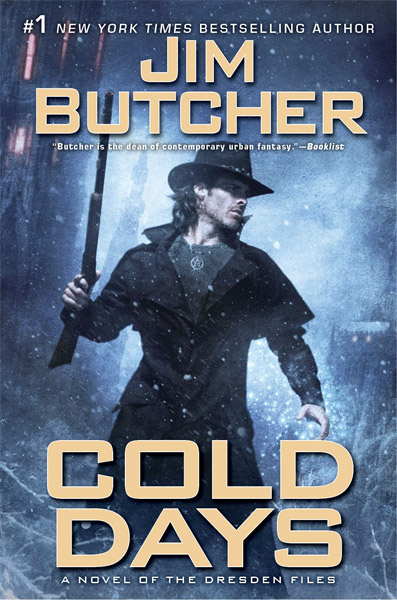
About a month ago, news broke that the latest novel in the Dresden Files series, Cold Days, will be released on November 27th.  Also revealed were the cover design and descriptive blurb:

HARRY DRESDEN LIVES!!!

After being murdered by a mystery assailant, navigating his way through the realm between life and death, and being brought back to the mortal world, Harry realizes that maybe death wasn’t all that bad. Because he is no longer Harry Dresden, Chicago’s only professional wizard.

He is now Harry Dresden, Winter Knight to Mab, the Queen of Air and Darkness. After Harry had no choice but to swear his fealty, Mab wasn’t about to let something as petty as death steal away the prize she had sought for so long. And now, her word is his command, no matter what she wants him to do, no matter where she wants him to go, and no matter who she wants him to kill.

Guess which Mab wants first?

Of course, it won’t be an ordinary, everyday assassination. Mab wants her newest minion to pull off the impossible: kill an immortal. No problem there, right? And to make matters worse, there exists a growing threat to an unfathomable source of magic that could land Harry in the sort of trouble that will make death look like a holiday.

Beset by enemies new and old, Harry must gather his friends and allies, prevent the annihilation of countless innocents, and find a way out of his eternal subservience before his newfound powers claim the only thing he has left to call his own . . .

His soul.
Well, that sounds cool1. Lots of questions are raised by this, such as who the immortal Harry's supposed to kill is, and whether they're someone, or even a type of someone, we've met before. And it's very interesting that the blurb is already talking about Harry getting out of being the Winter Knight - I would have expected that arc to stick around for another few books, or maybe even until the end of the series.

That cover art is pretty interesting, too - now, in the past the cover art has never tracked too closely to the plot of the novel (it's never been inaccurate, save for that hat, mind you, but trying to divine plot details from the art has usually2 proven futile), but for this one we have a fairly major shift in that Harry's carrying a rifle instead of his staff. So that could indicate that Harry's going to be switching up and/or expanding his tactical repertoire, especially if this immortal person is someone he can't get out of killing.

Anyway, I'm quite excited about this news - hopefully the preview chapters will be up sooner rather than later (rumor is the first to are in the paperback of Ghost Story - I'll have to see if I can scrounge one of those up).

In the meantime, I've been thinking for a while of giving the whole series a re-read, and this seems like the proverbial opportune moment. Hopefully it'll also make for some good blogging!

Sunday, September 09, 2012

Coolest Term Paper Ever


"The cycles should be linked to a majestic whole, and yet leave scope for other minds and hands, wielding paint and music and drama." - J. R. R. Tolkien, letter1 to Milton Waldman circa 1951.

Via Propnomicon comes news of an absolutely stunning Tolkien-related art project out of Germany. Benjamin Harff, as student at the Rhein-Sieg-Akademie for Realistic Visual Arts and Design, created for a class final one of the most beautiful copies of The Silmarillion I've ever seen:


In this interview, Harff gives some details about the creation process - it took him about a year to complete, first doing all the calligraphy by hand, then digitally combining it with the full Silmarillion text and creating the leather cover (which was professionally hand-bound) of what he calls the "Edel-Silmarallion". I hope Harff's professor was as impressed as I am!


1The Letters of J.R.R. Tolkien, No. 131.

Wednesday, August 15, 2012

The Secret of the Doctor's Grand-Daughter: An Exercise in Creative Mythography

About a year ago, I came across some references to a comic book hero called Atomic Robo. Although mostly appearing in print, several adventures are available for viewing online. One in particular, as soon as I began reading it, signaled to me that this was a story, and a character, I was really going to like.


No, they don't ever explain why Atomic Robo is driving B.A. Baracus' van, though I have a faint hope that the upcoming titled-but-unscheduled "Atomic Robo and the Soliders of Fortune" arc will address this.

Friday, July 27, 2012

Holmes for the Holidays

Something I've noticed over the past several months in my reading and film-watching habits recently has been a sharp increase in stories starring Sherlock Holmes. While I've long been a fan of the Greatest Detective, these things tend to come in waves, and right now the Holmes-wave is cresting.

Most obviously, the arrival of Sherlock Holmes: A Game of Shadows in theaters last December was an occasion of some welcome. I see that the first Guy Ritchie-directed Holmes adaptation came out during my own hiatus, and thus went uncommented on. I'll just take this opportunity to say that I found it an excellent movie, one that hewed close to the spirit of Doyle's stories, if not being perfectly accurate in every detail.

And I swear the tagline is an amusing coincidence.

The sequel is the pretty much the same, only more so. I do have a few quibbles with it - the liberties taken with the storyline were somewhat more noticeable, given that the film was adapting an existing Holmes story rather than making one out of whole cloth. I was also rather irritated at the fate of Irene Adler in the film, though I take some comfort from the fact that we never saw the body. So to speak.

Holmes and Watson, though, were in top form. Especially gratifying was the expanded use of Holmes' "plot-out-the-fight-in-slow-motion-in-advance" brawling technique, even considering the time that Holmes' meticulous sequence was derailed by a third party throwing a knife. And of course, his final encounter with Moriarty took this form as well, with amazing results. And let's not forget Watson -  I especially appreciated his use of deductive reasoning concerning Mycroft's appearance at his "bachelor party", as well as his penultimate confrontation with Colonel Moran.

Finally, I thought Jared Harris' portrayal of Professor Moriarty to be pretty good, with just the right amount of civility papering over seething menace. His plot was refreshingly prosaic, though it reminded me quite a bit - OK, it was pretty much identical - to the Fantom's plot in The League of Extraordinary Gentlemen. And we all know who he turned out to be:

Sunday, May 27, 2012

30 Day Book Challenge - Day 10

Post 10 - Favorite Classic Book


For this topic, while there was for obvious reasons a real temptation to discuss that famous Anglo-Saxon epic Beowulf, I ultimately decided to go with something a bit more well-known, namely the Odyssey of Homer.

Now, the Odyssey is a classic in every since of the word - many of most iconic images of Greek mythology, such as the Cyclops, the Sirens, Circe - even the Trojan Horse has its chronologically earliest mention here, rather than in the Iliad (in which it is not mentioned at all).

More tied to Odysseus himself, but no less fun to read about are instances such as the trip to the Underworld, and his stratagems against Penelope's suitors. Most of these episodes have been told, and retold, and are as familiar as they are fun to revisit.

But upon a deeper look, there's a bit more to The Odyssey than a fantastical Classical Grecian picaresque. The various episodes appear quite out of order, and when you sort through the digressions and flashbacks and shifts in viewpoint, a curious pattern emerges - all those famous incidents with incredible creatures appear in stories told by Odysseus (mostly to the Phaeacians), while the "real-time" sections deal with almost entirely mundane events, such as the intrigues aimed at dislodging The Suitors. There is an unspoken but definite possibility that Ulysses (renowned for his sneakyness) might not be an entirely reliable narrator about his adventures with giants and witches.

What's more, Odysseus' more fantastic adventures are neatly framed by the two huge storms, one at the beginning of his adventures (right before the Lotus Eaters) and the other at the end (as he makes his escape from Calypso's Island). This suggests that (assuming Odysseus is not just telling tall tales) the fantastic elements exist at a remove from the "real" world.

The potential for varied interpretations like these are no doubt just as important to the survival of The Odyssey as the ubiquity of the various incidents. However, even the deepest stories also need to be fun to tell and retell, and the genius of The Odyssey is that it manages to provide both.

Saturday, April 28, 2012

The Good, The Bad, and The Dwarven

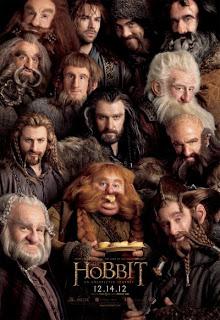
So, just in case there's anyone left on the Internet who hasn't heard the news, we have now seen a teaser trailer for The Hobbit: An Unexpected Journey:


I have to say, I'm pretty impressed, and my excitement for the movie has been upped by several levels.

Friday, April 27, 2012

30 Day Book Challenge - Day 9

A couple of weeks ago it came to my attention that the Egotist's Club blog - from whom, readers may recall, I borrowed the 30 Days Book Challenge - have started a new round of structured literary posting. While I'm far too behind on that to even consider participating, interested parties should go read all their Book Meme 2012 posts.

And speaking of the Book Challenge, I should probably be getting back to that:

Post 9 - A Book You Thought You Wouldn't Like But Ended Up Loving

One of the things I appreciated about my college education was the encouragement to read things that were out of my comfort zone, making me and the other students more well-rounded, better educated individuals, at least in theory.

Which isn't to say that "loving" isn't too strong a word for my feelings about, say, Aristophanes' comedic play The Frogs, but I still found it much more enjoyable than one would expect of a work over twenty-four centuries old.

Ironically enough, one of the things that I enjoyed about it was how modern it seemed at times. The first half of the book, particularly, is absolutely rife with the sort of metafictional commentary that one would expect to find in a more modern piece - the first line, even, is one of the characters offering to present the audience (this was a play, remember) with "one of the old gags".

Not all of the play was this sort of modern-seeming meta-referencing, however - several amusing parts, such as a sequence where Dionysus and his slave Xanthias keeping switching around their single Heracles costume (depending on whether or not it was advantageous to be mistaken for Heracles), have the air of something that made slightly more sense, or at least had better resonance, in its original context*. On the other and, much of the second act devolves into a argument among Dionysus and various Greek literary figures, which I found to be highly technical and not interesting in the least.

But, if only for the first part where Dionysus and Xanthias are making their farcical journey to the Underworld, I am glad that I was compelled to read The Frogs. It's always a good idea to break away from "the usual" once in a while, and believe me - not much about The Frogs is "usual".


*On the other hand, I freely admit that "slapstick comedy" isn't my preferred genre, and it's quite possible that the quick-change clothes-swapping trope is alive and well in contemporary comedy and just escaped my notice.

Saturday, March 31, 2012

Foggy Mountain Memorial

A few days ago, the news broke that Earl Scruggs had died. Now, as important a figure to Bluegrass music as he was, I can't say I was a huge fan - though what music of his I have listened to, I've enjoyed.


In fact, one of the first CDs I ever purchased was one of his, to be precise his 2001 album Earl Scruggs and Friends. Though it didn't inspire me to seek out more Scruggs specifically, I do think it helped shaped my taste for country music in general. One track notable in this regard is his cover of "Ring of Fire" with Billy Bob Thornton, which I actually prefer to Johnny Cash's version. Sorry, Johnny, but compared to Earl's your version sounds way too much like a Mariachi band.

But the most important, and certainly the most well-known, track from that album was a new version of "Foggy Mountain Breakdown". In my opinion Scruggs and company earned the Grammy this recording won them, and from the look of the video they had a blast laying it down:


Even though it's "just" the musicians in the studio, there's something about this video - like all good music videos - that makes it a joy to watch as well as listen to. Not just for the celebrity-spotting - yes, that's Steve Martin playing a banjo, and Wikipedia informs me that the gleeful maniac on the piano is Paul Shaffer - but the way each player gets some time as the primary focus, with said focus eventually returning to Scruggs himself is artfully done. And, as I said, the sheer joy evident in the various performances* is somewhat infectious - it's hard to keep from smiling while even listening to this piece.

And that, perhaps, is the best legacy any performer can have. Even though I have only a dim understanding of Earl Scruggs' legacy, I'm still grateful for the music he's left us with - and perhaps in the future I'll be inclined to listen to more of it.

*Well, except for the hirsute fellow on the keyboard - whenever the camera is on him he stays pretty Zen. 

Thursday, January 05, 2012

30 Day Book Challenge - Day 13

No, that's not a typo.

Post 13 - Your Favorite Writer


I am, in fact, posting this installment a bit out of order, for the purpose of acknowledging the just-passed hundred-and-twentieth (Twelvetieth?) birthday of said favorite writer - J. R. R. Tolkien.

There are many reasons that I consider Tolkien to be my favorite writer - I've been reading his books for almost my entire life, and it's easy to see how they've impacted my tastes over the years. More broadly, his influence on fiction has been incalculable - not only in the genre that he practically invented, but in pretty much any work that has an invented culture or people group, if there's any thought put into them  at all they probably owe something to Middle-Earth.

In addition to his being incredibly creative, I've also always admired the craftsmanship with which Tolkien did his writing. The vast amounts of unfinished and draft material published since his death - and how many authors are there whose notes and drafts are viable candidates for publication, hmm? - especially underscore this, since it gives a better sense of both the breadth and the depth of Tolkien's creation.

Indeed, it's the latter of those two qualities that I really admire, the way in which he applied his vast knowledge of philology, mythology, and pre-modern literature into building a fictional world that feels almost as real as the one outside the front door. And, as if that wasn't enough, Tolkien was something of a perfectionist, constantly revising his work to make everything fit better, to the point where it's a wonder we have anything of his to read at all.

Fortunately, we do have those works, and it's no exaggeration to say that without them the world would be a far grimmer place. So, happy (belated) birthday, Professor, and thank you for all those years of pleasure and inspiration.


John Ronald Reuel Tolkien, 3 January 1892 - 2 September 1973

Monday, December 19, 2011

30 Day Book Challenge - Day 8

I bet you thought I had forgotten about these, didn't you?

Post 8 – Most Overrated book


When I first encounter Marcus Heitz's fantasy novel The Dwarves, I was both somewhat surprised and rather excited. Now, as much as I like Tolkien, I've never been as fond of those works that took their major inspiration from him. Though there are no doubt many reasons for this, the relative sidelining of Dwarves in Tolkien's works (aside from The Hobbit) has always annoyed me, and so far as I am aware this has been more or less the standard ever since.

Therefore, when I first heard that there was a Dwarf-centric fantasy story floating around*, I was quite excited, and eager to get my hands on a copy. One might say that I pre-rated the book quite highly - however, this proved to be a mistake, as once I actually read it, I discovered that The Dwarves wasn't quite was I was expecting.

Now, there were quite a few interesting bits in the book, especially surrounding the Dwarvish culture described therein. The problem, at least to my mind, is that the author chose to make Tungdil, the hero of his story, an orphaned Dwarf raised among humans with no knowledge of his own culture.

I can see the appeal from a storytelling perspective, with the audience witnessing Dwarven political maneuvering, say, or finding out that each of the dwarven clans have an associated specialty among the traditional dwarven arts** at the same time the viewpoint character does. Furthermore, just typing out the last sentence of that last paragraph made me realize how much Tungdil's back-story resembles Worf's, although it goes a somewhat different direction.

Not a Dwarf, despite indications to the contrary.

Despite these perfectly understandable reasons, I was expecting  - perhaps hoping for - something with a bit more of an "insider" view. As it stands, the book was much less unlike most post-Tolkien high fantasy than I expected, hence my initial over-rating. In retrospect, I liked quite a bit about it, especially the Dwarf-centric parts that met my expectations - but, for every steampunk pneumatic intra-continental subway system, there seemed to be an irritating non-Dwarf sidekick (such as the Human actor Rodario, who for some inscrutable reason reminded me strongly of Gilderoy Lockhart, albeit more heroic).

Still, even all this hasn't managed to completely sour me on the series - and there are three more to read. I'm sure I'll get to them someday - just not as quickly as I might've otherwise.


*Admittedly, there may be others I haven't heard of - but then, I've never heard of them, have I?
**These consist of anything that involves making things out of rocks.

Monday, September 19, 2011

Music's Only Airship Pirates

With a crew of drunken pilots, we're the only airship pirates!
We're full of hot air and we're starting to rise
We're the terror of the skies, but a danger to ourselves!


Over the last decade or so, untold amounts of digital ink have been spilt trying to define the term "Steampunk". Part of the problem is that steampunk is more of a stylistic genre than anything else, and as such can be applied to film, or literature, or prop-making, or music, or pretty much any other form of art.

Now, while I've been interested in the genre since I first heard of its existence* that last category, steampunk-as-music-genre, didn't really appeal. Back in 2008, however, I came across a reference to a little ditty called "Airship Pirates", by a group called Abney Park. An intriguing title, to say the least. Once I had tracked down and listened to the song, well, I really liked what I heard:


Unfortunately,none of the other songs on their "Lost Horizons" album really grabbed me in quite the same way - not even the incongruously upbeat (not to mention plot-relevant) "Post-Apocalypse Punk". So, I bought a copy of "Airship Pirates" as a single, and went on my merry way.

A couple of years later, I heard a rumor that "The Wrath of Fate", a song from the band's new album, was something of a sequel to "Airship Pirates". Now, I'm a big fan of gratuitous continuity, so I decided to give it a shot.


Now, that's more like it. As I poked around, I discovered that the new album -  called The End Of Days - takes "gratuitous continuity" to a level possibly unheard of in the music industry.

It seems that, since Abney Park decided to brand itself as a "steampunk band", they've been using their songs to create a fictional background for themselves; a complex story involving time travel, accidental apocalypses ("plot-relevant", remember?), and of course Airship Piracy. In recent months, they've even branched out into a role-playing game and upcoming novel further exploring the setting.

But even without this lovingly crafted backstory, many of the songs from The End of Days (as well as their previous album, Æther Shanties) are quite enjoyable themselves. I would especially point out the aforementioned "The Wrath of Fate", "To the Apocalypse In Daddy's Sidecar", and "Neobedouin", from the former; and "Building Steam" and "The Clockyard" from the latter, as being well worth a listen.

With these last few albums, Abney Park has easily made itself one of the most unique-sounding bands I've ever heard. Even if they have written a philosophically questionable lyric or two (I'm still trying to work out whether the references to Christianity in "I've Been Wrong Before" are complimentary or not), I will be quite interested in whatever they end up doing next.

They're certainly better musicians than they are pirates, at least . . .

*The date of which, for the historically minded, I can only say (though with some certainly) was between 4 November 2004 and 23 February 2007.

Monday, September 12, 2011

So, Cowboys & Aliens . . .

 . . . has come and gone from the theaters, and I've had some time to mull over my reaction to it. I'd been anticipating the movie for quite some time, and was frankly a little bit underwhelmed. Don't get me wrong, there's nothing I can point to as being bad about this movie - well, nothing major, anyway - but I have, nonetheless, an unsettling feeling that something was off. Maybe my expectations were just too high.

Anyway, despite my vague dis-satisfaction, this film still did - and did well - what it set out to do, namely take a typical Western and turn it on it's ear by introducing invading aliens. Now, I'm not very familiar with the Western as a genre - I've often said my favorite example of such is Back to the Future Part III - but prior to the first alien attack, it seemed that we were all set for a stereotypical - and probably literal - showdown between the anti-heroic drifter* and the corrupt cattle baron that rules the town with an iron fist.


In their own ways, over the course of the film after the alien attack both Jake and Colonel Dolarhyde transcend the stereotypes they start out as. For Jake this is mostly a matter of slowly recovering his lost memory (though the closing scene indicates that he's given up outlawry), but Dolarhyde has a much more dynamic character arc.

He begins as a straight-up antagonist, first seen torturing one of his own employees over some incinerated cattle (for some reason, he doesn't believe the  hapless cowpoke's claim that the herd caught fire while he was falling in the river), then stomping into town to demand that the sheriff give him Jake (who did him some as-yet-unspecified injury) and Percy (his bratty son) instead of sending them to the Marshal, as the law requires.

As badly displayed as it is, this kernel of goodness - Dolarhyde's love for his son - is ultimately the catalyst for his redemption. In particular, Percy's capture by the aliens spurs him into leading the posse to track them down, thus forcing him to co-operate not only with a gang of outlaws that robbed him, but with the local Apaches. This is particularly eye-opening for Dolarhyde, as some of his employees are Apaches - and one in particular, Nat, seems to have great respect for Dolarhyde, and at one point brings up a tale of his deeds during the Civil War. Unfortunately, Dolarhyde does not appreciate this, gruffly telling him that the stories "weren't for you, they were for my son."

It is a big sign of Dolarhyde's development, then, that later on, as Nat lays dying, Dolarhyde tells him that "I always dreamed of having a son like you." Conveniently, when Percy is rescued from the aliens he's displaying the same amnesia that Jake had, which means that Dolarhyde has been given something of a second chance with him. It is, I suspect, not accidental that the name of their town is "Absolution".

In contrast to these weighty matters, a lot of the film, including the parts with the actual aliens, is actually quite light. In part, this comes from attempts to draw comparisons between the aliens and the cowboys - the worst example is probably the Space Lassos with which the townsfolk are abducted. Thankfully, almost nothing else is quite this campy**, and it's actually somewhat refreshing to have the alien's motivation be something as mundane as gold (of course, they may need it for industrial purposes and not, as Dolarhyde hilariously assumes, as currency).

The film did have a couple other mis-steps, such as the aliens' seemingly variable vulnerability to gunfire and/or bladed weapons. Another thing that bugged me was the upside-down ship in the middle of the desert - not that it wasn't a cool visual, but were we supposed to assume that the aliens somehow caused it? Because that would be completely at odds with what we later find out about the scale and capabilities of the alien's operations.

But these are minor vexations with what turned out to be a perfectly enjoyable film. I'm still not sure what exactly was lacking about it - it had, as I mentioned, deep character development, but there was quite a lot of decent and (so far as I could tell) period- and genre- appropriate action. And all this, without devolving into preachy comparisons of the invading aliens with the settlers. Perhaps it was, after all, just my expectations that were off - the film, for the most part, worked really well. If nothing else, they certainly nailed the Western "look" - when the west wasn't getting blown up, that is:


That image says everything else that needs to be said, really.


*I note with interest that, as an amnesiac, Daniel Craig's character begins the film quite literally as the man with no name. And when it is revealed, his last name is Lonergan. Ha!

**And it could have been much, much worse. Several years ago, the graphic novel this film was . . . let's say inspired by, was available to read online for free. Horses that flew because their shoes were made of alien metal were involved.

Thursday, August 18, 2011

30 Day Book Challenge - Day 7

Post 7 - Most Underrated Book

(Why yes, I did change the in-post header from "day" to "post".)

In the interests of making timely (ha!) and relevant posts, I'm going to interpret this category, and the next, as being books that I, prior to reading, either under-rated or over-rated, respectively.

When I first encountered Umberto Eco's The Name of the Rose, it was by stumbling across the film version of the book - a 1986 production starring Sean Connery, who, it must be admitted, was the reason I gave the film a second glance (Hey, look, Sean Connery in a monk habit!). I was preoccupied with something else at the time, and so didn't give the film my full attention, but I was intrigued enough to look up more information about it, and the book it was based on.

As I did so, the impression I got was that this would be a very difficult book to read, one that buried the story under oblique historical allusions. Thankfully, nothing could be farther from the truth - the book was very readable, despite being steeped in the culture of a 14th century monastery.

Being a 14th century monastery, there is a great deal of emphasis placed on literature and learning. In fact, one could say that this is the main theme of the book, or one of them at any rate (it's certainly the theme that was most relevant for me).

In the story, one of the biggest mysteries (besides "who's killing off all these monks?") is that of the monastery's library, which is forbidden to all but the librarians who bring the monks their requested texts. As the characters investigate, they find out that this library, and the knowledge it holds, is the key to the entire mystery, and there is plenty of discussion - even with the final villain - about literature, and especially whether preservation should be combined with distribution. To say more would be to give away too much of the ending, but as a nascent librarian I took especial interest in the issues being discussed as well as the skillful portrayal of an . . . outdated viewpoint.

There are also some clever literary references written into the book - for example, one of the monks, long gone blind and closely associated with the monastery's literally labyrinthine library, is named Jorge of Burgos, a clear allusion to the writer Jorge Luis Borges, who was also blind a wrote a famous short story about a similar, though much expanded, library.

The most obvious literary reference, of course, comes from Brother William of Baskerville. While his pupil Adso of Malk is the narrator, Brother William is definitely the hero of the book. As can be inferred from his name, he is intended to be a reference the Great Detective, Sherlock Holmes. The similarities continue with his appearance - taller and thinner than average, "his eyes . . . sharp and penetrating; his thin and slightly beaky nose" - all of these bring Holmes to mind*. Even in their vices, the two characters resemble each other - one amusing scene has Adso describing William's habit of picking and chewing certain un-named herbs, about which he is uncharacteristically reticent. The comparison between Holmes and Brother William is furthered even more by his use of amazingly developed deductive powers, especially one particular scene where he describes and names a missing horse, which he was never seen.

Actually, this last is an excellent example of how skillful Eco is at writing from a 14th-century viewpoint. After sending the befuddled monastery workers on their way, William explains that the detailed description of the missing horse was deduced not only from physical signs (footprints in the snow, tail-hairs left in the brush, etc.), but also from writings about horses: he quotes one authority's description of the "ideal horse", asserting that because the abbey thinks it's a good horse that they see it as conforming to that description; and notes that one famous logician uses a particular horse-name in his arguments, and therefore assumes that is the most likely name for any given real horse.

This use of scholarly writing as an unimpeachable authority serves several purposes - it illustrates the five-to-seven century difference in world-views, sets up part of the motivation of the final villain, and supports the general theme of the influence of books, both on human actions and on each other. That all of these threads were woven together, and in such a way as to make even 14th-century theological arguments at least mildly interesting**, was unexpected and contributed to my initial under-rate of the book. I am quite glad, however, that I went ahead and read it anyway.

*The blond hair and plot-significant, slightly anachronistic eyeglasses, however . . . don't.

** Although I freely admit that fictionalized arguments about outdated  doctrinal points might not be everyone's cup of tea, so to speak.

Wednesday, August 03, 2011

Avengers Assembled

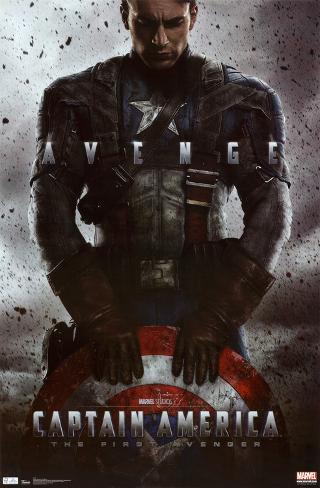
The past couple of weeks have been good ones for period genre movies. Not only was the extra- terrestrial- invasion- Western Cowboys & Aliens released last weekend (look for that post some- time next week), but it's also been the debut week for the superhero- World War II film Captain America: The First Avenger.

Which was, in my estimation, an excellent movie. In the inevitable competition between Cap and Thor, I believe I prefer the former - though this is largely on account of a general preference for pulpy to cosmic action.

Luckily, Captain America has some fairly substantial pulp roots, being directed by Joe Johnson, who also directed The Rocketeer and won an Oscar for effects work on Raiders of the Lost Ark - the latter, in fact, gets a shout-out from the Red Skull, who criticizes Adolph Hitler's search for "trinkets in the desert" while he has harnessed the power of Asgard.

Yeah, Asgard. One of the numerous things the film did well was tying in the previous films, in a much more overt manner than the blink-and-miss references of previous films. As mentioned, the power source for Red Skull's weird war machines is an artifact from Thor's Asgard - the 'chapel' scene where he first acquires it makes this patently obvious - and his last scene strongly implies that he got swept up into the Bifrost. On the allied side, one of the SSR's scientists is none other than Howard Stark, future father of Tony, and apparently the inventor of a mid-20th-century hovercar.

Indeed, I was greatly impressed with the film's the pulpy super-tech, and the general look of the film - it's probably the first time I have walked out of the theater and thought "Hmm, I wonder if there's an Art of book available yet?" (There is.)

But it takes more than good art direction to make a decent film. Fortunately, Captain America pays as much attention to story and character as it does to spectacle. The focus, of course, is on Steve Rogers - I thought the film did an excellent job of showing how, even pre-serum, he displayed the qualities of bravery (his beating in the alley), intelligence (the flagpole incident), and selflessness (the grenade episode), and how the serum merely allowed him to give full expression to his already noble character, less the relatively short time he spends in the USO (which, though objectively it may have actually been an important contribution to the war effort, was certainly portrayed as Cap not living up to his potential).

Previously, I had mentioned that I thought the preview of the Tesseract at the end of Thor was an odd choice, telegraphing as it did the ending of this film. As it happens, this turned out not to be a big deal, as we see - or at least infer - what happens to Cap at the end of the war, at the beginning of the film. Knowing what's coming, the fate of the Cube isn't nearly as important (and we do see its final acquisition by the proto-S.H.I.E.L.D, in a nice scene that builds both Cap's and Howard Stark's characters, without Cap even being present).

The film proper ends with Cap's introduction to the modern world, in a scene which cunningly mirrors the first few moments after he took the serum. Showing up to explain things is Nick Fury (of course), leading into next spring's Avengers film - which, now that all the principals have been shown, was previewed in a teaser trailer after the credits. Is it May 2012 yet?

Anyway, despite that buildup I think that Captain America works equally well as a stand-alone movie. It's not without its flaws - I was particular bothered by a few scenes in the "battles montage" that screamed "obviously supposed to be in 3-D!!" - but the good parts of the movie more than make up for it.

Monday, July 25, 2011

30 Day Book Challenge - Day 6

Day 6 - A Book That Makes You Sad

This one turned out to be a hard entry for me to write, and it ended up a slightly inaccurate one.

Slightly inaccurate in that it's only the end of the book in question that is at all melancholy. That book, I suppose I should say, is The House At Pooh Corner, the second of the two A. A. Milne books that introduced the world to Winnie-the-Pooh, Christopher Robin, and the other denizens of the Hundred-Acre Wood.

Now, I've been a fan of the Bear of Very Little Brain pretty much since infancy; therefore, I was quite thrilled when my family acquired a nice hardbound copy of The Complete Tales of Winnie-the-Pooh many years ago. I read it many times in middle school and after, and not always to my intellectual betterment (I distinctly recall one instance in which I received a less-than-stellar grade on a spelling test, partially for submitting the word hunnysuckle).

Negative influences on my spelling skills aside, I like this book for quite a bit. While most of the book is quite funny (and occasionally in ways at odds with the way Disney handles the characters - Eeyore in particular makes quite a few cutting remarks at opportune moments). The last couple of chapters, however, have always made me a bit melancholy.

For the penultimate chapter, this was largely because of the callous way Owl and Eeyore force Piglet out of his home. The fact that they don't seem to have realized it almost makes it worse - even as a little kid I found that whole sequence very unfair.

But it's really the last chapter that makes The House At Pooh Corner worth mentioning in this category. It's really quite odd, since the last sentence would seem to be a hopeful one:

"But wherever they go, and whatever happens to them along the way, in that enchanted place on the top of the Forest, a little boy and his Bear will always be playing." 

Despite this, the parts of the chapter immediately prior to this are all about how Christopher Robin's education is strange and confusing to Pooh, hearkening back to earlier chapters in which his schooling causes him to disappear completely from the Wood.

So on the one hand, you have the naturally bittersweet theme of growth, of leaving one stage and entering another. On the other, you have a deliberate subversion of this theme, with a hint that this subversion is not quite natural (note the reference to an enchanted place). I find the resulting clash somewhat distressing, and usually left me feeling sad when I finished the book.

Not that that ever stopped me from re-reading it, though.

Friday, July 01, 2011

30 Day Book Challenge - Day 5

So, yeah, at this point it's pretty obvious I'm not going to be doing all 30 of these in June. Sorry about that.


Day 5 – A Book That Makes You Happy

Observant and regular readers will have probably noticed by this point that one of the things I look for in my fiction is coherent (or at least interesting) world-building. The acknowledged grandmaster of this, of course, is J.R.R. Tolkien; he even coined some of the terminology associated with this, such as "Secondary World" and "sub-creation".

Some authors and other scholars take this one step farther - treating their favorite stories as the lightly-fictionalized records of real events, analyzing broad swathes of literature to uncover the "true" events behind them, and connecting them. This game has been played with popular literature for quite some time, and has interested me ever since I first heard of it. Indeed, I've even dabbled in The Game myself, and was actually intending to make this post about Crossovers.

Then, I finally manged to get ahold of a copy of Myths for the Modern Age, a collection of essays exploring this kind of "Tertiary World"-building, edited by the same Win Scott Eckert as is behind Crossovers. As a compilation, naturally there are some pieces that are more interesting than others - for example, one of the early pieces, "Wold-Newtonry: Theory and Methodology for the Literary Archeology of the Wold Newton Universe"is a particular favorite of mine; not least because of the delightful phrase, "literary archeology".

But that's not the article that convinced me to use the book for this post - that honor falls to Eckert's own "Who's Going to Take Over the World When I'm Gone?", a genealogical* study of the Moriarty family. Imagine my delight and surprise when, seemingly out of the blue, the article mentions how one of the Professor's grandchildren is none other than Howling Mad Murdock of The A-Team (the television version, obviously). Since Murdock is pretty much my favorite A-Team member, and The A-Team itself one of my favorite television shows, I was quite pleased at this.

Amongst other amusing tidbits from that section was the idea that Murdock's first name is "Hamish" - in the show, Murdock is never given a first name, only an initial. And why is this so amusing? Because the name "Hamish" is a variant form of "James", which according to Sir Arthur Conan Doyle was the first name of both Professor Moriarty and at least one of his brothers (the cavalier attitude some famous authors take towards continuity is part of what makes this kind of fandom so entertaining).

As if Murdock wasn't enough, both Eckert's article and a later one by Brad Mengel ("Watching the Detectives, Or, The Sherlock Holmes Family Tree") both theorize that Hannibal Smith was the son of Fu Manchu's great nemesis, Sir Denis Nayland Smith. Furthermore, it seems that Hannibal's grandfather was Fu Manchu himself (through his mother Fah lo Suee) - this Asian ancestry no doubt explains how Hannibal kept getting away with his "Mr. Lee the Chinese Laundry Man" persona.


This is a much better disguise in real life.

While the inclusion of half the A-Team is what qualified Myths for the Modern Age as a Book That Makes Me Happy, there's plenty of other good material to be found within. Admittedly, much of it is available on Eckert's Wold Newton Universe website, though I understand the published versions are more up-to-date. Indeed, a quick poke around the site shows that it includes only Hannibal's inclusion, not Murdock's. This is no criticism, merely an acknowledgement that the two sources are different - and it will surely inspire me to acquire my own copy of Myths, from a source other than the library.

*Genealogical studies linking various fictional characters being one of the major features of Wold Newton Universe scholarship.

Sunday, June 12, 2011

A Remembrance For "Raiders"

Taking a quick break from the Book Challenge, I'd like to mention a particularly auspicious movie anniversary.

Thirty years ago today saw the theatrical release of Raiders of the Lost Ark, by most metrics one of the best films ever made. It's certainly one that had a measurable impact on me, even though I didn't actually see it until I was in my teens.

Once I did, however, it quickly became one of my favorite films*. A large part of this, I think is my appreciation for Indiana Jones as a character - he's a much more intellectual character than many similar heroes, and as many encounters with characters played by Pat Roach shows, isn't always (or even often) able to win a fight simply by overpowering his opponent.

Raiders is also a fairly tightly-plotted movie, moving along from scene to scene with just enough explanation to be understandable, without losing momentum.

And boy is there a lot of momentum.

Despite a few mis-steps (in particular, Brody's recounting of the Ark's appearances in the Bible has always seemed a bit exaggerated to me), it's easy to see why this movie is so highly regarded - and I'm sure that thirty more years won't change that at all.

*Although, to be truthful, I slightly prefer Indiana Jones and the Last Crusade. But only slightly.

Friday, June 10, 2011

30 Day Book Challenge - Days 3 & 4

Hmph - two posts in and already there's schedule slippage. Nothing to do but carry on, I suppose.

Day 3 – Your Favorite Series

Not surprisingly, there are quite a few different sets of books that could qualify for today's first category. The Chronicles of Narnia would be an obvious answer, if I weren't saving them for an upcoming day; as would the Dirk Pitt novels by Clive Cussler, and Terry Pratchet's Discworld series, both also favorites of mine. I ended up basing my decision on a number of factors - what series (I asked myself) am I most likely to recommend for someone looking for something new to read? What series do I buy new installments to immediately upon release? Most relevantly, what series jumped immediately to mind when I read the question? When I thought about it that way, one answer came readily to mind - The Dresden Files, by Jim Butcher.

Another reason to like the series is the great, if not always accurate, cover art by Chris McGrath.

Although it took a few installments to really settle in, the books telling the story of modern-day wizard Harry Dresden have been consistently high-quality in storytelling and world- and character building. Although we only learn about it in bits and pieces, there definitely seems to be a consistent backstory to the Files, and lots of things going on the background that Harry (our first-person narrator) doesn't seem to be aware of. It takes a skillful writer to pull this off properly, and so far I for one haven't been disappointed.

As the series has progressed, the characterization has also only improved, not that it was ever bad to begin with. This not only applies to the main characters, Harry and Karrin Murphy and the rest of the cast that appears in pretty much every book, but to just about everyone that appears - even characters who start out as one-note obstacles to Harry (I'm thinking of Morgan specifically here, who starts out in a fairly stereotypical unreasonable-lawman mode, but by the later books is considerably more sympathetic. And then - but I won't go into that). The books also deserve special mention for Michael Carpenter, easily one of the best Christian characters to be found in a secular novel of recent years.

Most importantly, The Dresden Files is fun to read, figuring out the whodunnit-and-why plots along with Harry, piecing together the backstory as Jim lets it out, and making guesses and deductions about where the series will ultimitely end up.


Day 4 – Favorite Book Of Your Favorite Series